
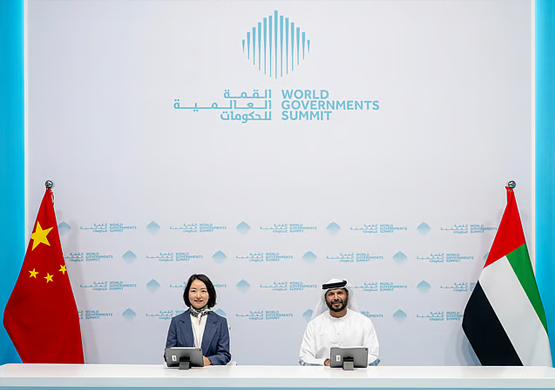
DUBAI — In a move that blends ancient desert wisdom with cutting-edge Chinese engineering, Dubai has officially committed to transforming its urban landscape into a “Sponge City.”
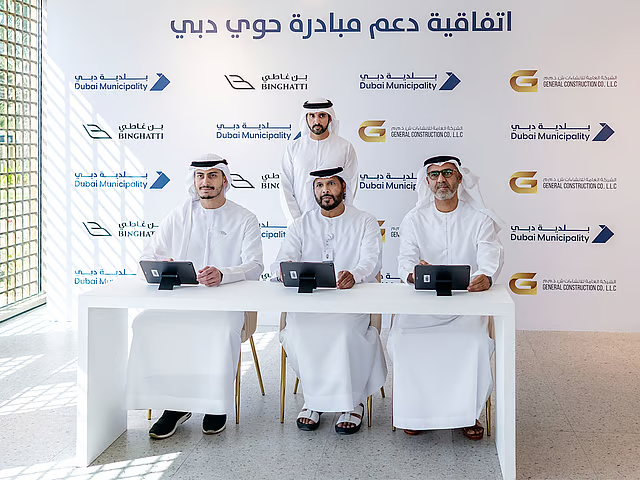
During the 2026 World Governments Summit (WGS), Dubai Municipality signed a strategic Memorandum of Understanding (MoU) with the Urban Planning and Design Institute of Shenzhen (UPDIS). The partnership aims to adapt China’s revolutionary water-management model to the unique climate of the UAE, ensuring the city remains resilient against the increasingly intense rainfall patterns affecting the region.
What is a ‘Sponge City’?
The concept, pioneered by Shenzhen to manage its own rapid urbanization, moves away from traditional “grey infrastructure”—the network of concrete pipes and pumps that often become overwhelmed during storms. Instead, a Sponge City utilizes “nature-based solutions”:
-
Permeable Pavement: Sidewalks and roads that allow water to soak through rather than pooling on top.
-
Bio-Swells and Rain Gardens: Landscaped green zones designed to absorb and naturally filter runoff.
-
Rooftop Greenery: Gardens that capture rainwater before it ever hits the street.
-
Underground Reservoirs: Massive “aquifers” that store excess water for later use in irrigation, reducing the city’s reliance on desalinated water.
A Partnership Born in Shenzhen
The agreement is the culmination of a year-long exchange that began in February 2025, when a high-level Dubai delegation visited Shenzhen. Officials found a striking parallel between the two cities: both are young, global tech hubs that have undergone explosive growth in just a few decades.
“This partnership reflects Dubai’s commitment to learning from the best in the world,” said Marwan Ahmed bin Ghalita, Director General of Dubai Municipality. “By collaborating with Shenzhen, we are not just solving a drainage issue; we are building a more liveable, green, and people-centric city.”
Beyond Water: A “Smart City” Blueprint
While the “Sponge City” model is the headline, the MoU covers a broader spectrum of urban innovation aligned with the Dubai 2040 Urban Master Plan:
-
AI-Driven Management: Using big data and 5G-enabled sensors to monitor water levels and predict drainage loads in real-time.
-
Transit-Oriented Development: Designing compact, “walkable” urban hubs that reduce carbon footprints.
-
Integrated Underground Services: Planning for the “city beneath the city” to streamline utilities and infrastructure.
The Resident Impact
For the people of Dubai, the benefits go beyond dry shoes. The Sponge City model requires a massive increase in urban greenery. By replacing concrete with parks and “rain gardens,” the initiative will naturally cool the city (combating the “urban heat island” effect) and provide more recreational spaces for families.
As climate change shifts traditional weather patterns, Dubai’s “sponge” transformation marks a proactive shift in governance turning the challenge of a desert storm into an opportunity for a greener, more sustainable future.
Leave a Reply
Want to join the discussion?Feel free to contribute!