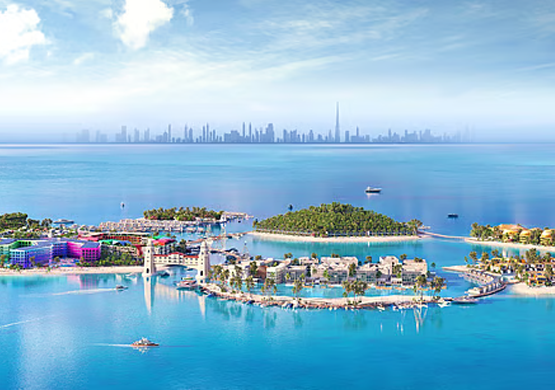
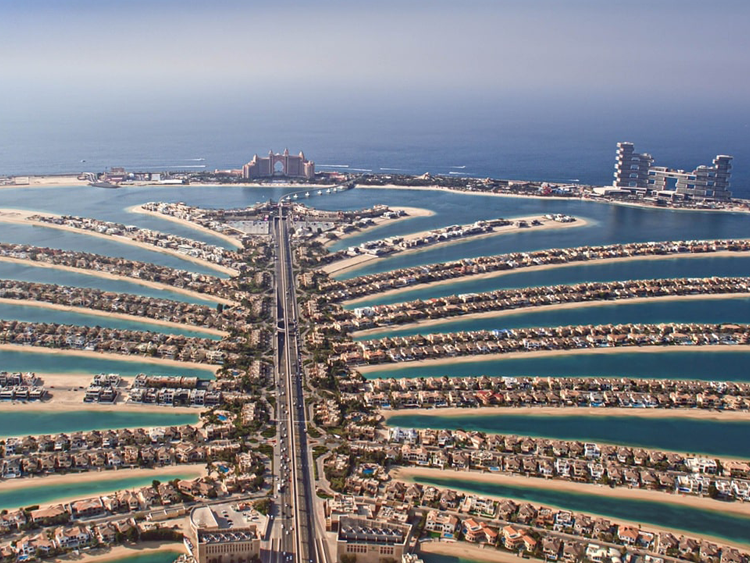
The emirate’s real estate sector continues its relentless upward trajectory, posting a 31% increase in transaction value as foreign and luxury investments reach new heights.

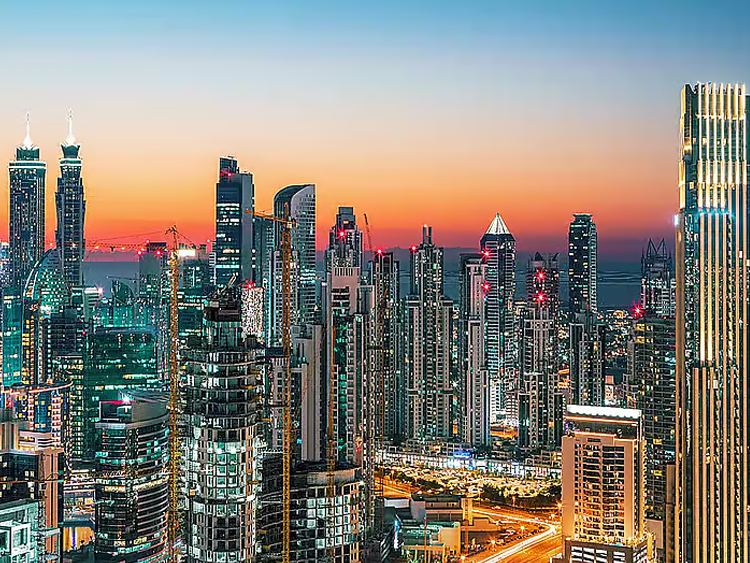
DUBAI – Dubai’s real estate market has kicked off 2026 with a record-breaking performance, signaling that the city’s appeal as a global investment haven is stronger than ever. New data released by the Dubai Land Department (DLD) reveals that total real estate transactions skyrocketed to Dh252 billion in the first quarter of the year, a staggering 31% jump compared to the same period in 2025.

The volume of activity was equally impressive, with 60,303 transactions recorded—a 6% year-on-year increase—forming part of a massive 718,160 total real estate procedures processed during the quarter.

The New Wave of Investors

The market’s growth is being fueled by a rapidly expanding and diversifying investor base. In Q1 2026 alone, Dubai welcomed 29,312 new investors, representing a 14% increase in fresh capital entrants. This brings the total active investor count for the quarter to nearly 48,500.

One of the most notable trends is the rising influence of female investors. Women contributed Dh32 billion to the market across more than 15,000 investments, a clear indicator of the sector’s accessibility and the growing confidence of female wealth owners in Dubai’s property landscape.

Foreign Capital and Luxury Demand

Dubai remains a magnet for international wealth. Foreign investment value surged by 26%, hitting Dh148.35 billion. While global interest is at an all-time high, regional ties remain a cornerstone of the market; GCC nationals injected Dh12.23 billion, while investments from the wider Arab world totaled over Dh12 billion.

The luxury segment continues to be the “crown jewel” of the industry. High-end developments saw a 26% increase in investment, reaching Dh87.71 billion. Analysts suggest this is driven by the city’s safe-haven status and the influx of high-net-worth individuals seeking world-class lifestyle offerings.

Strategic Vision Fueling Stability

Experts and officials note that this growth isn’t just a “short-term spike” but the result of disciplined economic planning. The current momentum aligns with the Dubai Economic Agenda (D33) and the Dubai Real Estate Strategy 2033, which aim to double the sector’s contribution to the emirate’s GDP.

“These figures reflect a market driven by solid fundamentals, not speculation,” said a spokesperson for the Dubai Media Office. “The combination of advanced digital infrastructure, a flexible regulatory environment, and the leadership’s long-term vision has created a level of trust that is unique in the global market.”

Q1 2026: Key Figures at a Glance

  • Total Transaction Value: Dh252 billion (+31% YoY)

  • Total Investment Value: Dh173 billion (+22% YoY)

  • New Investors: 29,312 (+14% YoY)

  • Women’s Investments: Dh32 billion

  • Luxury Segment Value: Dh87.71 billion (+26% YoY)

As Dubai continues to transform challenges into opportunities, the Q1 results set a high bar for the remainder of the year, positioning 2026 to potentially be the most successful year in the history of Dubai real estate.

Vertical Victory: Burj Khalifa’s AED 12 Million Lease Sets New UAE Rental Benchmark

In a move that underscores the relentless appetite for “trophy assets” in Dubai, a one-of-a-kind duplex in the world’s tallest tower has been leased for a record-shattering AED 12 million ($3.27 million) per year.

While global markets often grapple with volatility and regional geopolitical shifts, Dubai’s ultra-luxury sector appears to be operating in its own atmosphere. The recent leasing of a massive duplex penthouse in the Burj Khalifa for AED 12 million hasn’t just broken a record—it has redefined the ceiling for the UAE’s residential rental market.

A Six-Year Architectural Masterpiece

The residence in question is not your standard luxury apartment. Spanning the 87th and 88th floors, the property is the result of a meticulous, six-year transformation led by its owner, Karl Haddad.

Unlike other units in the tower, this residence was created by merging multiple apartments into a single, vertical duplex. The engineering feat required over three years of approvals alone, involving the structural modification of concrete slabs to install a private internal staircase—making it the only vertical duplex of its kind within the Burj Khalifa.

The residence features:

  • Scale: Over 10,000 square feet of ultra-prime living space.

  • Privacy: A 2,500 sq. ft. master suite and dedicated private cinema.

  • Wellness: An in-home spa, sauna, gym, and a private outdoor swimming pool.

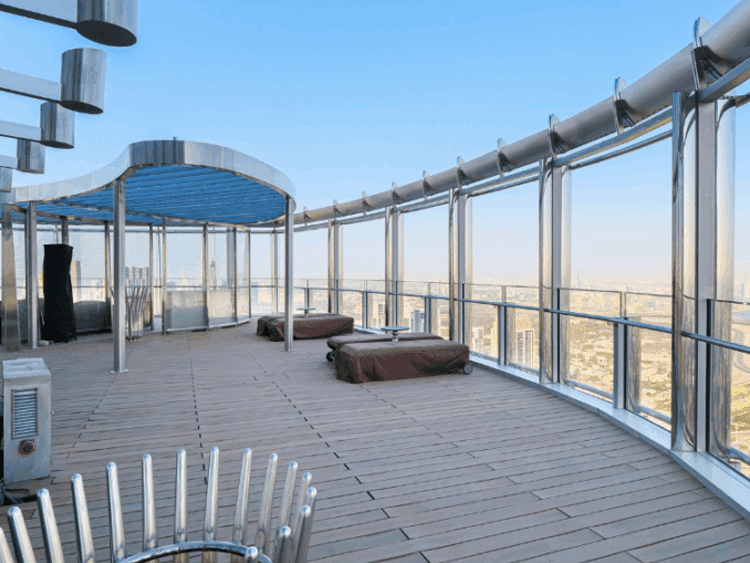
  • The View: A 2,000 sq. ft. terrace offering 360-degree panoramic views of the Dubai skyline and the Arabian Gulf.

Mobility Over Ownership: The New UHNWI Trend

The transaction, facilitated by the digital real estate platform Keyper, highlights a shifting mindset among the world’s ultra-high-net-worth individuals (UHNWIs). Historically, a Dh12 million budget would be reserved for property acquisition. Today, elite tenants are increasingly choosing record-high leases to maintain liquidity and global mobility without sacrificing the prestige of a landmark address.

“Ultra-high-net-worth individuals are prioritizing flexibility without compromising on scale or privacy,” noted Omar Abu Innab, Co-Founder and CEO of Keyper. “A Dh12 million annual lease would have been unthinkable just a few years ago, but it reflects the growing sophistication of Dubai’s rental market.”

Defying Uncertainty

The timing of the deal is perhaps as significant as the price tag. Amidst broader regional tensions and global economic shifts, capital is becoming more “selective.” According to the property’s owner, Karl Haddad, the lease is a testament to the stability of the Emirates.

“In times of volatility, capital does not retreat; it becomes more selective,” Haddad stated. “Dubai has built an ecosystem where ambition is protected and confidence is sustained, even in testing moments.”

The Bottom Line

As Dubai continues to position itself as a global safe haven for wealth, the Burj Khalifa lease serves as a “trophy” for the city’s real estate strategy. By offering assets that literally cannot be replicated elsewhere, Dubai ensures that its ultra-prime market remains decoupled from the fluctuations of the wider region.

For the anonymous tenant, the AED 12 million annual rent buys more than just 10,000 square feet of glass and steel it buys a seat at the very top of the world.

While regional tensions and global economic shifts often cause investors to pause, Dubai’s luxury property market is doing the exact opposite. New data shows that the emirate’s “trophy assets” are not just surviving, they are thriving.

The Numbers: A Record-Breaking March

Despite the traditional seasonal softening typically seen during Ramadan, March 2026 has proven to be a powerhouse month for Dubai’s developer sales. High-net-worth individuals (HNWIs) have poured Dh10.92 billion into the luxury residential segment in just three weeks.

  • Volume Surge: Transaction volumes jumped by 42% year-on-year.

  • The Sweet Spot: The most active segment remains the Dh5 million to Dh10 million bracket, accounting for 650 deals worth Dh4.54 billion.

  • Ultra-Prime Deals: The “super-luxury” tier (Dh20m–Dh50m) recorded nearly 80 transactions, proving that deep-pocketed investors still view Dubai as the ultimate destination for capital preservation.

Standout Sales: “Trophy” Assets

The appetite for unique, high-value properties remains insatiable. Notable transactions this month include:

  • A Dh422 million luxury apartment on the Jumeirah Peninsula.

  • Prime plots in Umm Suqeim First fetching between Dh125 million and Dh152 million.

Why Dubai Defies the Trend

Analysts point to a fundamental shift in the market. Unlike previous cycles driven by speculation, today’s growth is built on structural stability. Several key factors are insulating Dubai from regional “jitters”:

  1. The “Safe Harbor” Effect: As global wealth seeks tax-efficient and secure jurisdictions, Dubai’s Golden Visa program and lack of capital gains tax make it an irresistible magnet for entrepreneurs and family offices.

  2. Maturity Over Hype: The market is entering a “measured phase.” While some sellers have adjusted asking prices by up to 20% in specific villa communities, experts view this as a healthy recalibration rather than a sign of weakness.

  3. Developer Flexibility: Leading developers like Emaar are maintaining momentum by offering attractive payment plans, ensuring liquidity remains high even during periods of geopolitical uncertainty.

The Verdict: A Resilient Future

The migration of global wealth toward Dubai is no longer a temporary trend—it is a long-term relocation. With prime locations like Palm Jumeirah, Dubai Marina, and Business Bay continuing to see record demand, the emirate has solidified its reputation as one of the world’s most dependable real estate hubs.

As Knight Frank and CBRE analysts suggest, as long as Dubai continues to offer lifestyle security and investor-friendly regulations, its upward trajectory appears decoupled from the volatility affecting other global markets.

Key Takeaway: Dubai’s luxury market is no longer just a place to spend money; it is the place where the world’s wealthy go to protect it.

The Central Bank of the UAE (CBUAE) has released its latest projections, indicating that the UAE’s real GDP is set for a significant expansion of 5.6% in 2026. This follows an equally robust performance in 2025, signaling a period of sustained economic momentum for the nation.

Here is a breakdown of the key drivers and figures from the latest economic report:

Consistent High-Level Growth

The CBUAE’s March 2026 report highlights the UAE’s resilience in the face of global economic fluctuations and regional tensions. After recording an estimated 5.6% growth in 2025, the economy is expected to maintain this pace through 2026. This performance consistently outperforms both regional and global averages.

Non-Oil Sector: The Growth Engine

The diversification of the UAE economy continues to pay dividends. The non-hydrocarbon sector remains the primary driver of prosperity:

  • Key Sectors: Growth is being spearheaded by financial and insurance services, manufacturing, and a booming construction sector.

  • Real Estate: The residential market saw “solid performance” throughout the previous year, with Abu Dhabi and Dubai experiencing high transaction volumes driven by population growth and sustained international investor interest.

  • Tourism & Aviation: In the first half of 2025 alone, Dubai welcomed nearly 10 million international visitors, a trend that has bolstered the aviation and hospitality industries into 2026.

Oil Sector Recovery

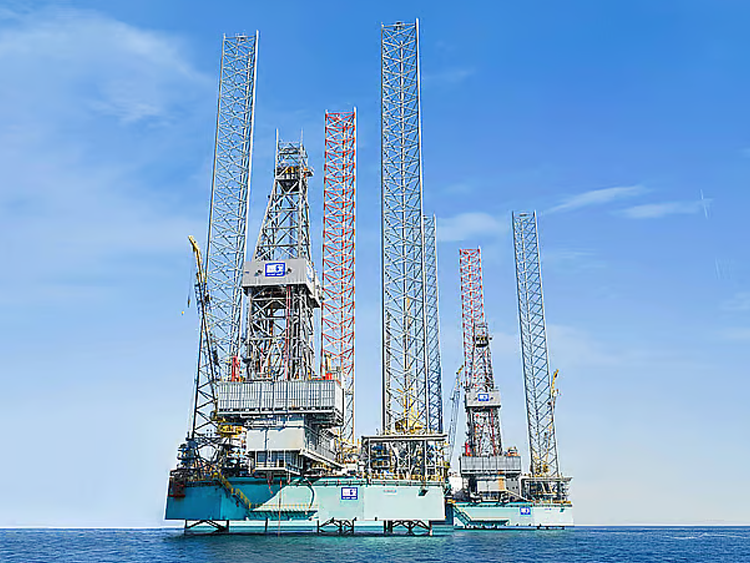
While the non-oil sector leads, the hydrocarbon sector is also poised for a strong contribution. As OPEC+ production quotas are adjusted, the UAE is expected to see a rise in oil output, supporting the overall headline GDP figure.

Inflation and Monetary Policy

  • Controlled Inflation: The CBUAE projects headline inflation to remain moderate at 1.8% for 2026, slightly up from the 1.3% average seen in 2025. This stability is attributed to declining transport costs and favorable food price developments.

  • Interest Rates: In line with global trends and the U.S. Federal Reserve, the Central Bank lowered its Base Rate to 3.65% at the end of 2025 and has maintained that level into early 2026 to support continued credit growth.

Financial Stability

The UAE banking sector remains a pillar of strength:

  • Assets & Loans: Total banking assets rose by over 17% annually to reach AED 5.34 trillion by the start of 2026.

  • Capital Strength: Banks are well-capitalized with a capital adequacy ratio of 17.1%, while asset quality improved with a non-performing loan (NPL) ratio of just 1.6%.

Medium-Term Outlook

The Central Bank remains optimistic, noting that the medium-term prospects are “broadly balanced.” This positive outlook is underpinned by the continued adoption of Artificial Intelligence (AI) to raise productivity and a generally supportive global financial environment.

DUBAI – The World Islands has reasserted its position as the ultimate playground for the global elite, recording a landmark villa sale worth Dh220 million.

The transaction, officially registered with the Dubai Land Department (DLD) via the Dubai REST app, underscores the relentless momentum in the emirate’s super-prime residential sector.

The Details

Located on the exclusive Amali Island—a premier enclave within The World Islands development—the property represents the pinnacle of private waterfront living.

  • Sale Price: Dh220,000,000

  • Size: Approximately 58,081 square feet (5,395 square meters)

  • Average Price: Dh3,787 per square foot

A Market in Overdrive

This mega-deal is not an isolated event but rather a reflection of a record-breaking period for Dubai real estate. Data for 2025 showed a staggering 45% increase in the total value of luxury transactions compared to the previous year, with over 6,600 high-end deals recorded.

While established neighborhoods like Palm Jumeirah and Emirates Hills continue to see heavy investment, the “rebirth” of The World Islands is increasingly drawing ultra-high-net-worth individuals (UHNWIs) who prioritize seclusion and 360-degree sea views.

Why Investors are Choosing Dubai

Market analysts point to several factors sustaining these “trophy” purchases despite global economic shifts:

  1. Golden Visa Incentives: The long-term residency program remains a primary driver for foreign investment.

  2. Unmatched Privacy: Projects like Amali Island offer a resort-style lifestyle that is difficult to replicate in more urban coastal areas.

  3. Capital Appreciation: Prime waterfront land in Dubai remains undervalued compared to global hubs like London, New York, or Monaco, offering significant upside for investors.

Looking Ahead

The Dh220 million sale coincided with a flurry of activity in the Dubai market, including a Dh705 million land plot sale in Al Sufouh Gardens on the same day. As international entrepreneurs and global wealth continue to migrate to the UAE, the demand for “one-of-a-kind” island residences is expected to push prices even higher through 2026.

For many, this latest deal is proof that for the world’s wealthiest, Dubai isn’t just a place to visit—it’s the place to own.

In the world of global real estate, headlines can often create a temporary fog of uncertainty. This was the case during the first weekend of March 2026, as geopolitical tensions between the United States and Iran sparked a wave of cautious sentiment across the GCC.

However, as the dust settles, the data tells a much more powerful story than the headlines. The UAE real estate sector hasn’t just weathered the storm it has sprinted right through it.

Here is an in-depth look at why Dubai’s property market remains one of the most resilient investment hubs in the world.


The “Weekend Pause” vs. The Monday Surge

While the weekend of March 1st saw a temporary slowdown driven by investor sentiment, the rebound was almost instantaneous. By Monday, March 2nd, the Dubai Land Department (DLD) recorded a staggering 874 real estate transactions with a total value of AED 2.46 billion ($670 million).

This quick return to high-volume trading proves that the market’s liquidity is not tied to short-term news cycles, but rather to a deep-seated confidence in the UAE’s long-term stability.

Perception vs. Reality: Life on the Ground

There is often a significant gap between international media perception and the reality of daily life in the Emirates. While regional alerts were heightened, the UAE government responded with swift, clinical precision.

Enhanced security measures were implemented across land, sea, and air to ensure that supply chains and public services remained uninterrupted. The result?

  • Airports remained fully operational.

  • Retail hubs like Dubai Mall and Downtown Dubai remained packed with tourists and residents.

  • Hospitality sectors reported high occupancy levels for holiday homes and hotels.

Essentially, the “engines” of the city never stopped turning.

Operations as Usual: Handovers and Renewals

One of the truest tests of a real estate market is its operational consistency. According to a recent report by Provident Estate, the “back-office” of the industry remained in full swing throughout the period of tension.

Property handovers, snagging services, and contract renewals continued without delay. Secondary market viewings—often the first thing to drop during a crisis—remained consistent across Dubai’s key communities. This suggests that both buyers and tenants are looking past the noise and focusing on the tangible value of UAE property.

The Structural Pillars of Resilience

Why does Dubai stay so stable when other markets might falter? The article highlights several foundational pillars that act as a safety net for the economy:

  • Institutional Crisis Management: The UAE has mastered the art of coordinating between government bodies to maintain public confidence.

  • Banking Liquidity: A robust financial sector ensures that capital continues to flow, even during global volatility.

  • Diversification: Real estate is a cornerstone of a much larger strategy that includes aviation, tourism, and financial services, making the economy less vulnerable to single-point failures.

The Expert Take: “Built on Fundamentals”

Loai Al Fakir, CEO of Provident Estate, summed up the situation perfectly: “Dubai’s real estate market has proven time and again that it is built on strong fundamentals rather than short-term sentiment. What we are seeing now is a brief moment of caution, not a shift in investor confidence.”

Final Thoughts

The events of early March 2026 serve as a case study in market maturity. While geopolitical shifts are inevitable, the UAE has built a system designed to absorb these shocks and maintain its trajectory. For investors, the message is clear: the market is functioning, the liquidity is there, and the long-term outlook remains overwhelmingly positive.

Is now the time to buy? If $670 million in single-day transactions is any indication, the world’s investors have already made up their minds.

DUBAI, UAE – In a move that cements Uptown Dubai’s reputation as a rising epicenter for business and lifestyle, DMCC has officially launched The Plaza, a massive 21,000-square-meter open-air destination.

Positioned as the “connective tissue” of the Uptown Dubai district, the sprawling venue is designed to be a high-octane stage for everything from global corporate summits to star-studded concerts and community festivals.

A Venue Built for Scale

The Plaza isn’t just an open space; it is a tech-forward amphitheater of sorts. With a capacity to host up to 4,000 guests, the venue comes equipped with:

  • A 43-meter HD screen for immersive visual experiences.

  • Advanced staging and lighting infrastructure designed for quick event turnarounds.

  • Expansive green lawns and terraces that offer views of the Jumeirah Lakes Towers (JLT) skyline.

Strategically located at the heart of the district, The Plaza serves as a physical bridge, linking the landmark Uptown Tower with the surrounding residential and commercial phases currently under development.

Activating the “Work-Live-Play” Vision

Ahmed Bin Sulayem, Executive Chairman and CEO of DMCC, described the opening as a “defining milestone.”

“The Plaza introduces a scale and capability that positions Uptown Dubai as a premier venue for major international events, as well as everyday community moments,” said Bin Sulayem. He noted that the space is central to Dubai’s broader vision of being the world’s best city to live and work in, creating a “strong sense of place” for both residents and global professionals.

To ensure a year-round calendar of activity, DMCC has partnered with 7 Management—the powerhouse behind some of Dubai’s most popular hospitality concepts—to operate and program the space.

What’s Next for Uptown Dubai?

The debut of The Plaza coincides with a period of rapid growth for the district. Currently, two new commercial towers (standing 23 and 17 storeys tall) are under construction, which will eventually add 62,000 square meters of Grade A office and retail space to the area.

Once the master plan is fully realized, Uptown Dubai will boast over 538,000 square meters of total gross floor area, reinforcing its status as a massive integrated business hub for trade, finance, and technology.

First Look: The Moonlight Market

The Plaza is wasting no time in making its mark. Its first major activation is the Moonlight Market, a month-long Ramadan experience running from 6:00 PM to 2:00 AM. Visitors can expect street food favorites, open-air cinema nights, and curated retail stalls, offering a first glimpse at how the space will transform from a corporate hub by day into a vibrant social destination by night.

DUBAI — In a move that blends ancient desert wisdom with cutting-edge Chinese engineering, Dubai has officially committed to transforming its urban landscape into a “Sponge City.”

During the 2026 World Governments Summit (WGS), Dubai Municipality signed a strategic Memorandum of Understanding (MoU) with the Urban Planning and Design Institute of Shenzhen (UPDIS). The partnership aims to adapt China’s revolutionary water-management model to the unique climate of the UAE, ensuring the city remains resilient against the increasingly intense rainfall patterns affecting the region.

What is a ‘Sponge City’?

The concept, pioneered by Shenzhen to manage its own rapid urbanization, moves away from traditional “grey infrastructure”—the network of concrete pipes and pumps that often become overwhelmed during storms. Instead, a Sponge City utilizes “nature-based solutions”:

  • Permeable Pavement: Sidewalks and roads that allow water to soak through rather than pooling on top.

  • Bio-Swells and Rain Gardens: Landscaped green zones designed to absorb and naturally filter runoff.

  • Rooftop Greenery: Gardens that capture rainwater before it ever hits the street.

  • Underground Reservoirs: Massive “aquifers” that store excess water for later use in irrigation, reducing the city’s reliance on desalinated water.

A Partnership Born in Shenzhen

The agreement is the culmination of a year-long exchange that began in February 2025, when a high-level Dubai delegation visited Shenzhen. Officials found a striking parallel between the two cities: both are young, global tech hubs that have undergone explosive growth in just a few decades.

“This partnership reflects Dubai’s commitment to learning from the best in the world,” said Marwan Ahmed bin Ghalita, Director General of Dubai Municipality. “By collaborating with Shenzhen, we are not just solving a drainage issue; we are building a more liveable, green, and people-centric city.”

Beyond Water: A “Smart City” Blueprint

While the “Sponge City” model is the headline, the MoU covers a broader spectrum of urban innovation aligned with the Dubai 2040 Urban Master Plan:

  • AI-Driven Management: Using big data and 5G-enabled sensors to monitor water levels and predict drainage loads in real-time.

  • Transit-Oriented Development: Designing compact, “walkable” urban hubs that reduce carbon footprints.

  • Integrated Underground Services: Planning for the “city beneath the city” to streamline utilities and infrastructure.

The Resident Impact

For the people of Dubai, the benefits go beyond dry shoes. The Sponge City model requires a massive increase in urban greenery. By replacing concrete with parks and “rain gardens,” the initiative will naturally cool the city (combating the “urban heat island” effect) and provide more recreational spaces for families.

As climate change shifts traditional weather patterns, Dubai’s “sponge” transformation marks a proactive shift in governance turning the challenge of a desert storm into an opportunity for a greener, more sustainable future.

In February 2026, the UAE’s Emirates Drug Establishment (EDE) introduced a revolutionary “Organ on Chip” initiative during the World Health Expo in Dubai. This technology is set to transform the way drugs are developed and tested, moving away from traditional animal models toward more accurate, human-relevant systems.

Here is a summary of the development as reported by various outlets, including Gulf News.

What is “Organ on Chip” Technology?

Organ-on-chip devices are micro-engineered electronic chips that simulate the functions, structure, and biological responses of actual human organs.

  • The Mechanism: These chips (often the size of a microscope slide) contain tiny channels where fluids and human cells circulate. This creates a micro-environment that mimics the physiological and mechanical conditions of a real human body.

  • The Goal: To test the efficacy and toxicity of new drugs on highly accurate human models before they ever reach clinical trials.

Key Highlights of the UAE Project

  • Project Falcon: The initiative is part of a larger strategy called Project Falcon (Future of AI, Lab-Automation and Organ Chips for Onward Innovation in Medicine). It combines laboratory automation with AI to speed up drug discovery.

  • Replacing Animal Testing: Historically, drug testing has relied on animal models or flat cell cultures in petri dishes. However, animal physiology often differs from humans, leading to high failure rates in human trials. The “Organ on Chip” technology aims to solve this “biological reductionism” by using real human samples.

  • National Pharmaceutical Security: Dr. Shaikha Al Mazrouei, Director of the Reference National Laboratory at EDE, noted that adopting these advanced solutions strengthens the reliability of results and bolsters the UAE’s national pharmaceutical security.

Wide-Ranging Applications

The UAE plans to use this technology across several critical sectors:

  1. Drug Discovery: Developing disease models, screening compounds, and evaluating drug safety.

  2. Precision Medicine: Optimizing cell and gene therapies and identifying novel tumor antigens.

  3. Oncology: Rapid AI-based testing for clinical tumor drug sensitivity.

  4. Cosmetics: The technology will also benefit the cosmetics industry by providing a way to test skin sensitivity and toxicity without animal testing.

Why It Matters

By integrating AI-driven lab robotics and real-world data, the UAE is positioning itself as a global leader in medical product regulation and healthcare innovation. This technology doesn’t just make drug testing faster and cheaper—it makes it safer for patients by providing data that is directly applicable to human biology.


This report is based on announcements made at the World Health Expo (WHX) 2026 at Expo City Dubai.

ABU DHABI — UAE President His Highness Sheikh Mohamed bin Zayed Al Nahyan met with Kosovo President Vjosa Osmani-Sadriu at Qasr Al Shati on Thursday, signaling a deepening of ties between the Gulf nation and the Balkan republic.

The meeting, held on the sidelines of the World Governments Summit (WGS) 2026, focused on expanding economic partnerships, government modernization, and regional stability.

Key Highlights of the Meeting:

  • Economic Expansion: Both leaders reaffirmed their commitment to boosting trade and investment. Discussions centered on identifying new opportunities in development sectors that align with the mutual interests of both nations.

  • Government Modernization: With President Osmani in town for the WGS, the two presidents explored collaborative efforts in “future-proofing” government frameworks and digital transformation.

  • Balkan Stability: Sheikh Mohamed bin Zayed reiterated the UAE’s long-standing policy of supporting peace and security in the Balkans. He emphasized that stability in the region is a cornerstone for broader global security.

  • Humanitarian Recognition: President Osmani expressed gratitude for the UAE’s ongoing humanitarian initiatives in Kosovo, noting that Emirati support has been instrumental in the country’s social advancement and empowerment programs.

Strategic Context

The meeting comes at a symbolic time, as Sheikh Mohamed offered early congratulations to President Osmani ahead of Kosovo’s Independence Day on February 17.

For the UAE, the engagement underscores its growing role as a diplomatic mediator and economic partner in Southeastern Europe. For Kosovo, the partnership offers a vital bridge to Gulf capital and expertise in infrastructure and technology.

The discussions were attended by several high-ranking officials, including H.H. Sheikh Hamdan bin Mohamed bin Zayed Al Nahyan, Deputy Chairman of the Presidential Court for Special Affairs.


Quick Facts: UAE-Kosovo Ties

  • Occasion: Working visit for the World Governments Summit 2026.

  • Priority Areas: Trade, investment, and government innovation.

  • Diplomatic Stance: UAE continues to advocate for “dialogue and development” as the primary tools for Balkan integration.

Article Source