
UAE unveils ‘Organ on Chip’ technology for drug testing at World Health Expo in Dubai
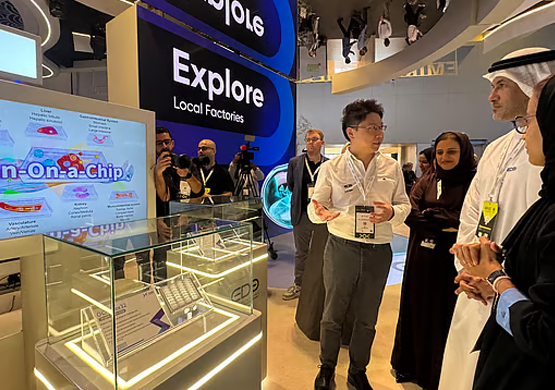
In February 2026, the UAE’s Emirates Drug Establishment (EDE) introduced a revolutionary “Organ on Chip” initiative during the World Health Expo in Dubai. This technology is set to transform the way drugs are developed and tested, moving away from traditional animal models toward more accurate, human-relevant systems.
Here is a summary of the development as reported by various outlets, including Gulf News.
What is “Organ on Chip” Technology?
Organ-on-chip devices are micro-engineered electronic chips that simulate the functions, structure, and biological responses of actual human organs.
-
The Mechanism: These chips (often the size of a microscope slide) contain tiny channels where fluids and human cells circulate. This creates a micro-environment that mimics the physiological and mechanical conditions of a real human body.
-
The Goal: To test the efficacy and toxicity of new drugs on highly accurate human models before they ever reach clinical trials.
Key Highlights of the UAE Project
-
Project Falcon: The initiative is part of a larger strategy called Project Falcon (Future of AI, Lab-Automation and Organ Chips for Onward Innovation in Medicine). It combines laboratory automation with AI to speed up drug discovery.
-
Replacing Animal Testing: Historically, drug testing has relied on animal models or flat cell cultures in petri dishes. However, animal physiology often differs from humans, leading to high failure rates in human trials. The “Organ on Chip” technology aims to solve this “biological reductionism” by using real human samples.
-
National Pharmaceutical Security: Dr. Shaikha Al Mazrouei, Director of the Reference National Laboratory at EDE, noted that adopting these advanced solutions strengthens the reliability of results and bolsters the UAE’s national pharmaceutical security.
Wide-Ranging Applications
The UAE plans to use this technology across several critical sectors:
-
Drug Discovery: Developing disease models, screening compounds, and evaluating drug safety.
-
Precision Medicine: Optimizing cell and gene therapies and identifying novel tumor antigens.
-
Oncology: Rapid AI-based testing for clinical tumor drug sensitivity.
-
Cosmetics: The technology will also benefit the cosmetics industry by providing a way to test skin sensitivity and toxicity without animal testing.
Why It Matters
By integrating AI-driven lab robotics and real-world data, the UAE is positioning itself as a global leader in medical product regulation and healthcare innovation. This technology doesn’t just make drug testing faster and cheaper—it makes it safer for patients by providing data that is directly applicable to human biology.
This report is based on announcements made at the World Health Expo (WHX) 2026 at Expo City Dubai.